
Learn Tajweed online, from Makharij to Ijazah.
When you learn Tajweed online with us, every rule is drilled in live recitation. Every rule taught in order and applied while you recite, not memorized as theory. One-on-one with qualified teachers in Hafs ʿan ʿAsim, for children, teens and adults.
No credit card · No contract · Parents welcome to sit in
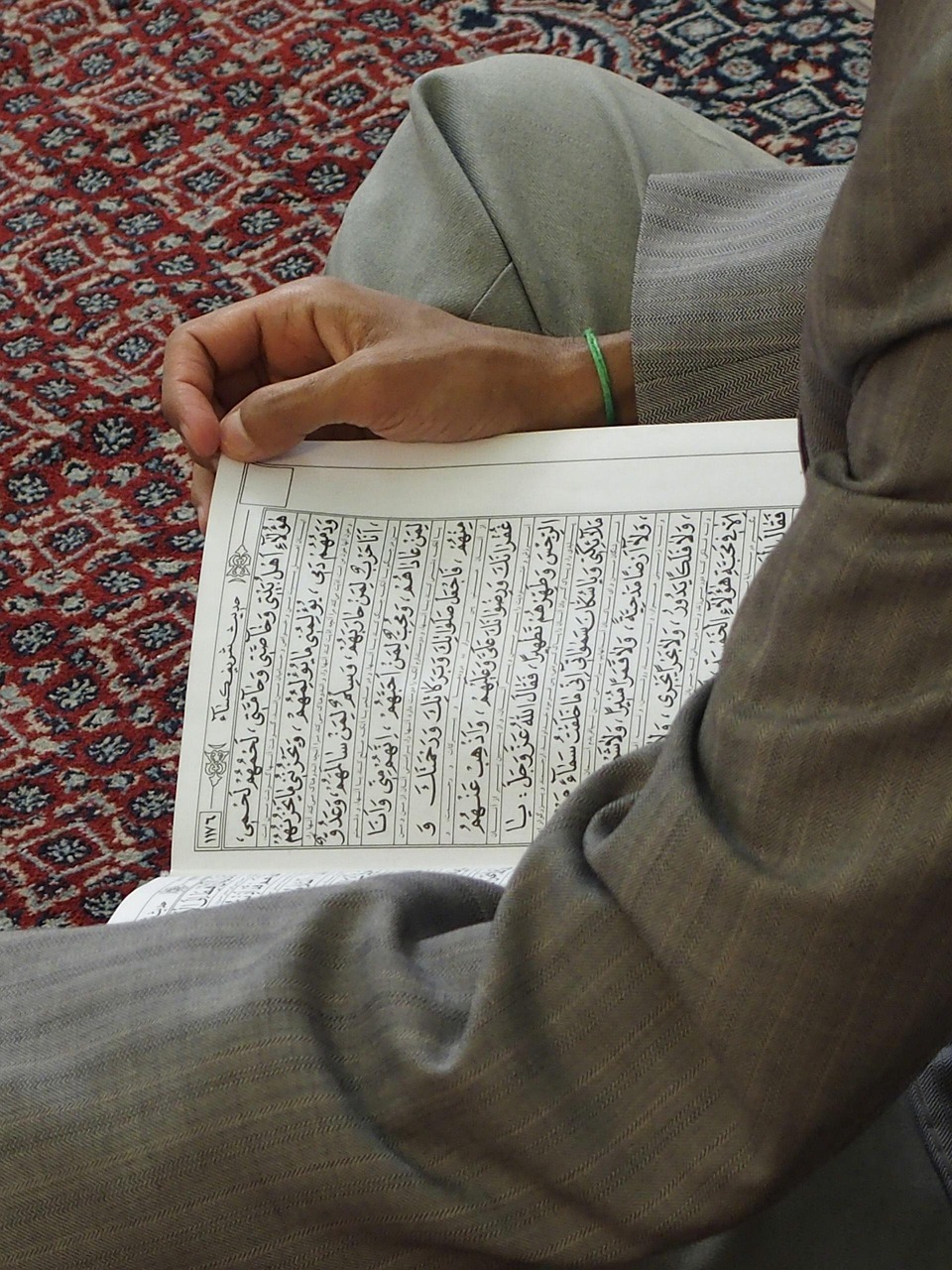
What is Tajweed and why does it matter?
Tajweed is the set of rules governing how each letter of the Quran is pronounced: where the sound is produced, how long a vowel is held, and how letters change when they meet. It protects the meaning of the words, because a mispronounced letter can change a word entirely. Most students learn the core rules in 6 to 12 months alongside their regular recitation.
The curriculum, step by step
We follow the classical sequence, and advanced students study Tuhfat al-Atfal and Al-Muqaddimah al-Jazariyyah.
Rules you can hear, not rules you can recite.
Plenty of students can name the four rules of Noon Sakinah and still not apply one of them while reading. Theory without correction is wasted time.
- Every rule is drilled in live recitation, in the ayahs you are already reading
- Makharij demonstrated visually, with the teacher showing tongue and lip position
- Lahn Jali and Lahn Khafi explained, so you know which mistakes change meaning
- Colour-coded Tajweed on the whiteboard for younger students
- Monthly recitation audio, so you can hear your own improvement
How long does it take to learn Tajweed?
Most students grasp the core rules in 6 to 12 months of regular classes. Applying them fluently without thinking takes longer, usually a year or two of consistent recitation.
Is learning Tajweed obligatory?
Scholars distinguish between the rules that prevent clear mistakes (Lahn Jali), which are widely held to be obligatory because they change meaning, and the finer rules of beautification (Lahn Khafi), which are recommended. Your teacher will explain the distinction as it applies to your recitation.
The Ijazah track
Advanced students who recite the full Quran to a certified teacher, with correct Tajweed throughout, can earn an Ijazah with a connected Sanad in Hafs ʿan ʿAsim.
- Assessment of your current level first
- Structured recitation schedule, usually 5 days a week
- Full Quran recited to an Ijazah-holding teacher
- Certificate naming your Sanad on completion
Is this course right for you?
Children learning to recite
Tajweed alongside Qaida and Nazra from the very start.
Teens and adults
Fixing habits formed in childhood, often faster than expected.
Imams and reciters
Refining recitation for Taraweeh and public recitation.
Ijazah candidates
Advanced students ready to recite the full Quran for a Sanad.
What this course costs
Same price for male and female teachers. Free trial first, no card details.
Starter
For young beginners
- 2 classes a week (8/month)
- 30-min 1-on-1 sessions
- Noorani Qaida or Nazra
- Monthly progress report
- Male or female teacher
Standard
Best for steady progress
- 3 classes a week (12/month)
- 30-min 1-on-1 sessions
- Qaida, Nazra, Tajweed or Arabic
- recorded progress updates on request
- Free rescheduling & makeups
Intensive
For Hifz & fast learners
- 5 classes a week (20/month)
- 30-min 1-on-1 sessions
- Hifz, Tajweed or Tafseer
- Weekly Sabaq & Manzil tracking
- Priority teacher matching
Learn Tajweed online: your questions answered
Still have a question? Talk to a real person, any time of day or night.
What are Makharij al-Huruf?
Makharij are the articulation points where each Arabic letter is produced: the throat, tongue, lips, nasal passage and the empty space of the mouth. Mastering them is the foundation of every other Tajweed rule.
What are the rules of Noon Sakinah and Tanween?
There are four: Izhar (clear pronunciation), Idgham (merging into the next letter), Iqlab (changing to a meem sound) and Ikhfa (a hidden sound with Ghunnah).
What is Qalqalah?
Qalqalah is the light echoing or bouncing sound applied to the letters ق ط ب ج د when they carry a sukoon.
What is the difference between Lahn Jali and Lahn Khafi?
Lahn Jali are clear mistakes that change the meaning, such as mispronouncing a letter or a vowel. Lahn Khafi are subtler mistakes in the beautification rules, such as shortening a Madd.
Which riwayah do you teach?
Hafs ʿan ʿAsim, the most widely used recitation. Other Qira’at can be arranged for advanced students.
Can I get an Ijazah online?
Yes. Many contemporary teachers grant Ijazah after hearing a full recitation over video, following the same standard as in person.
Can my child learn Tajweed and Hifz at the same time?
Yes, and it is the right way to do it. Memorizing with incorrect Tajweed means re-learning later.
Do you have female Tajweed teachers?
Yes. Every female teacher is a Hafiza, Qaria and Alima with Ijazah, at no extra cost.
خَيْرُكُمْ مَنْ تَعَلَّمَ الْقُرْآنَ وَعَلَّمَهُ
“The best of you are those who learn the Quran and teach it.”, Sahih al-Bukhari 5027
Recite the Quran the way it was revealed.
Book a free class and let a qualified Hafiz and Qari assess your recitation honestly.
No credit card · No contract · Male & female teachers · Every US time zone